Loans
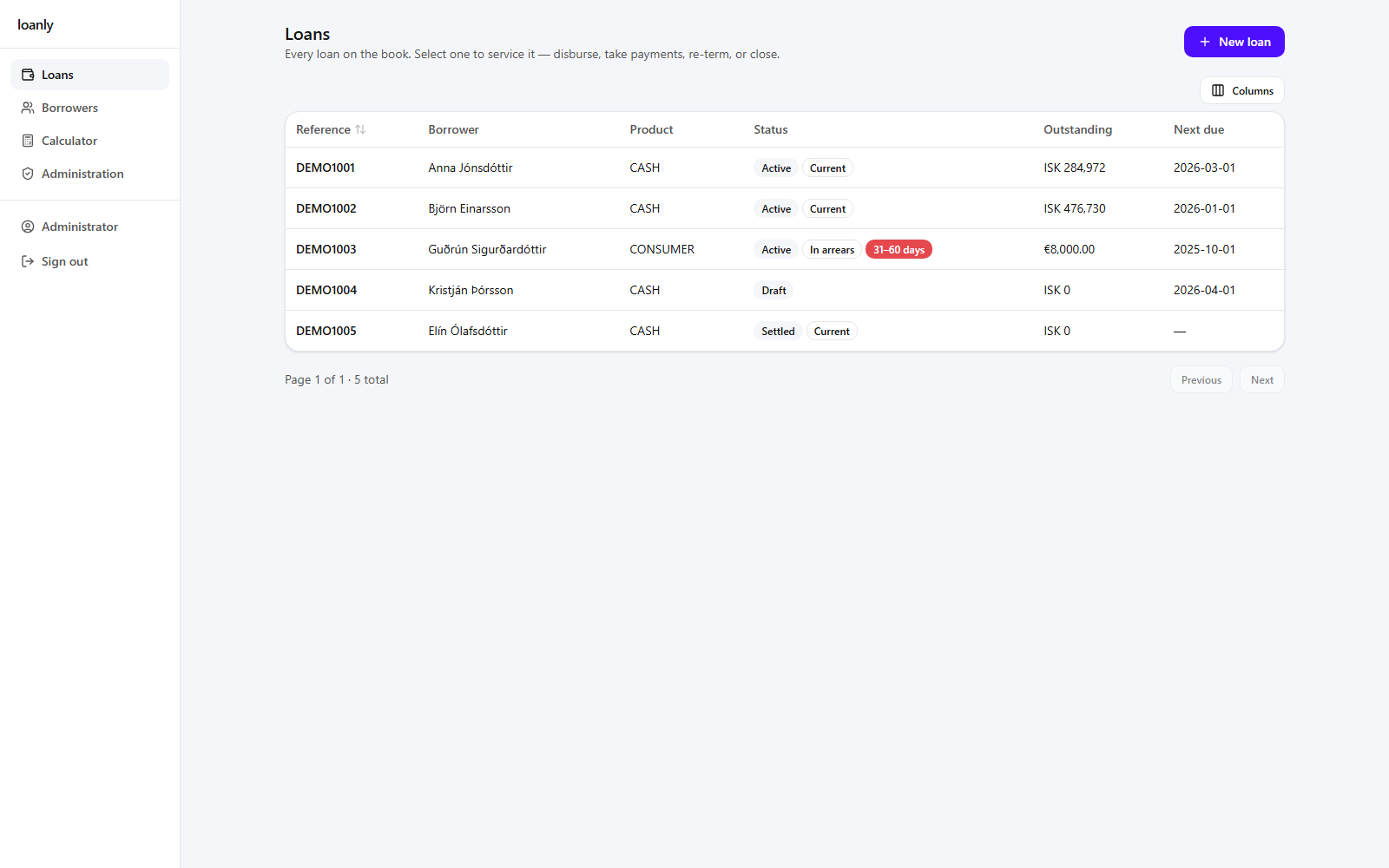
The loan book. Each row is a loan with its borrower, product, status, outstanding balance, and next due date. Create a new loan with New loan, or open one to service it.
The loan detail
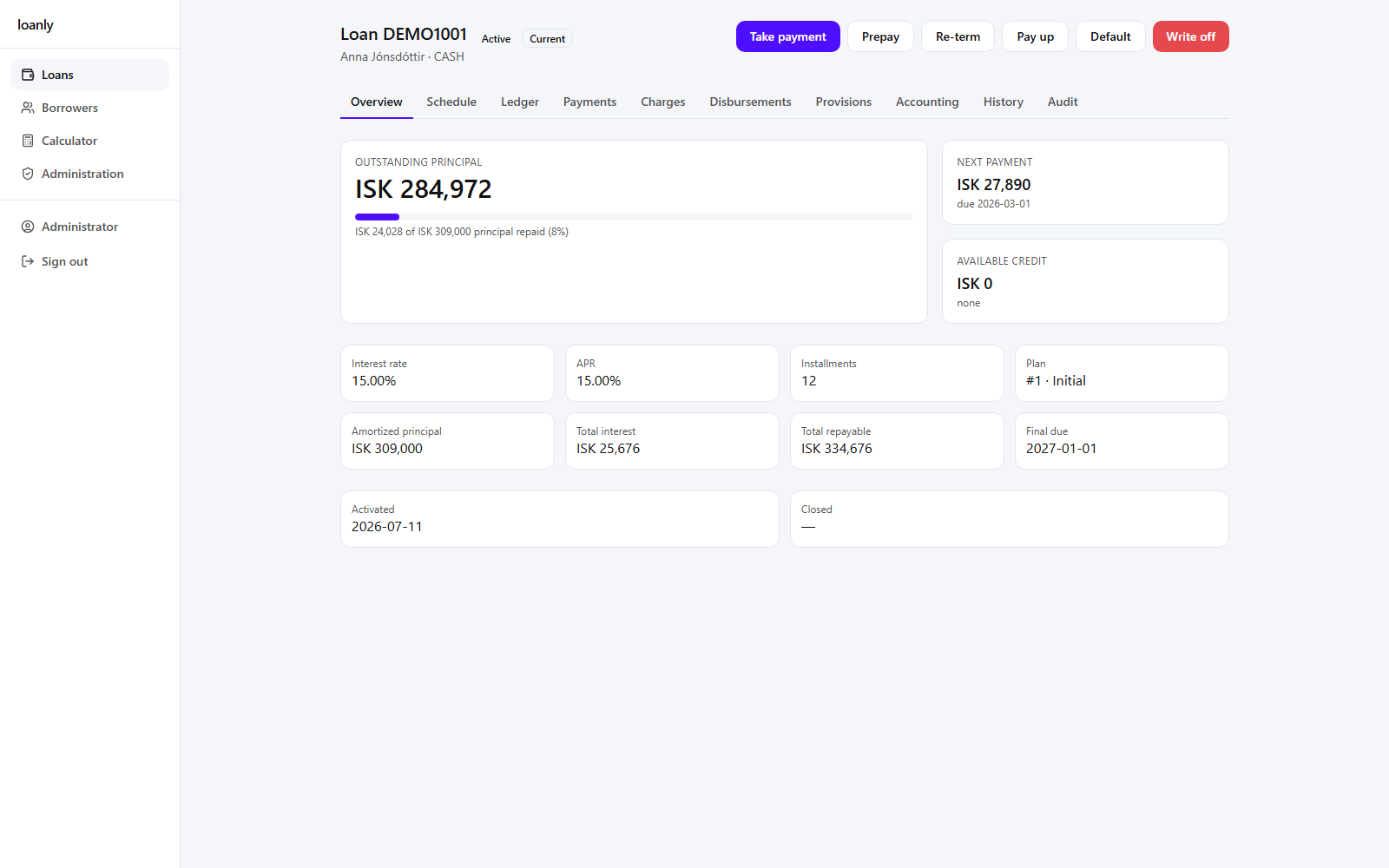
Opening a loan shows everything about it. The header carries the status and the servicing actions; below it, tabs break out the full history. Every tab is documented below.
Servicing actions
The buttons in the header drive the loan through its lifecycle (each is permission-gated):
- Take payment — record an incoming payment; it's applied through the waterfall (charges, interest, principal…).
- Prepay — an extra principal payment that re-amortizes the remaining schedule on the lower balance.
- Re-term — put the loan on a new schedule (new installment count and/or rate).
- Pay up — early settlement: quote the payoff figure as of a date, then settle and close the loan.
- Default / Write off — move a loan into default or write off the balance.
A recorded payment can also be reversed (a returned direct debit / charge-back) or, where the borrower has overpaid, refunded. Every action is explained end-to-end in Concepts → Loan actions.
Tabs
Overview
Outstanding principal and repayment progress, the current terms (interest rate, APR, installments, totals), and key dates (activated, final due).
Schedule
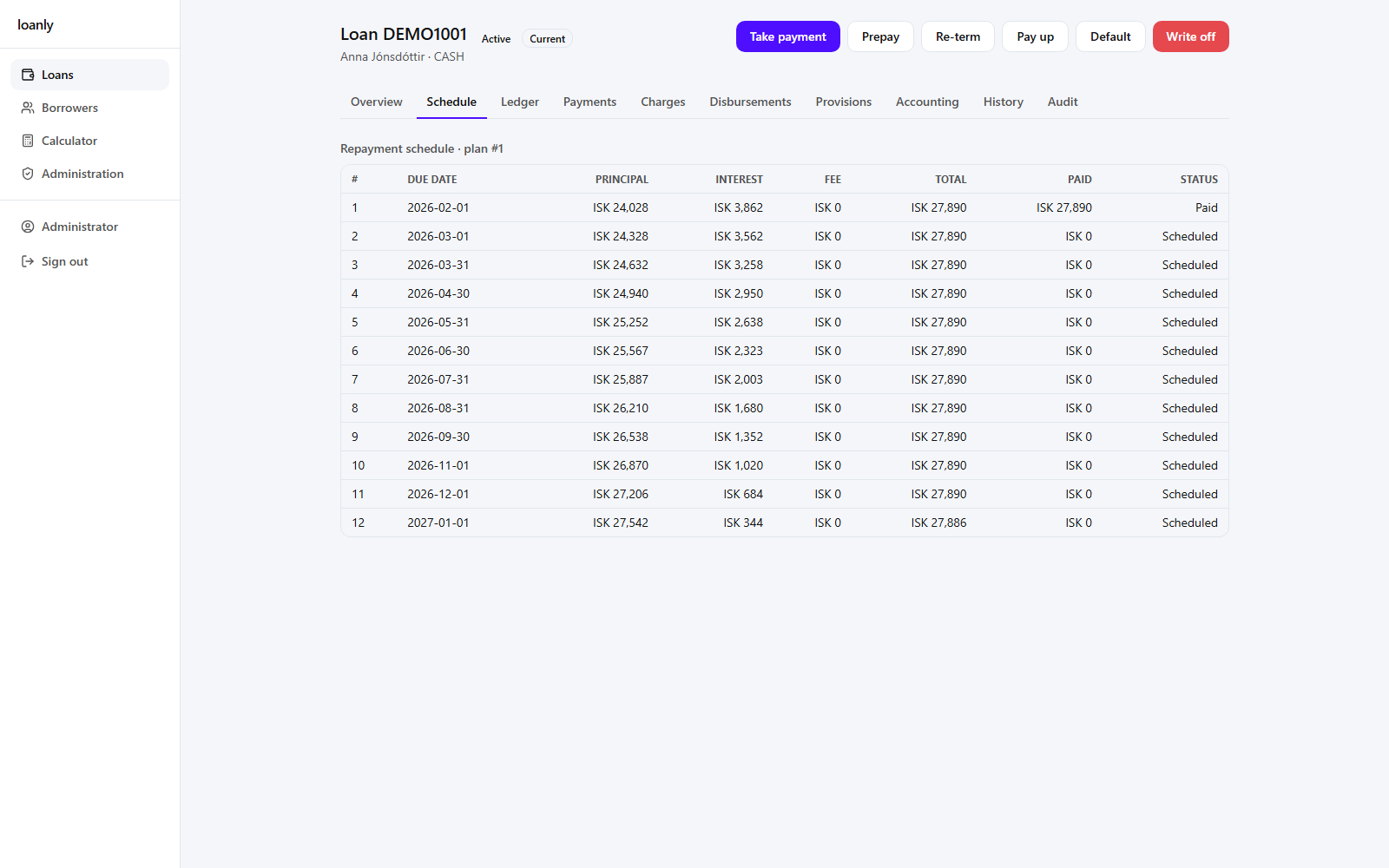
The current installment plan — due date, principal, interest, fee, total, and paid amount per line, with each installment's status.
Ledger
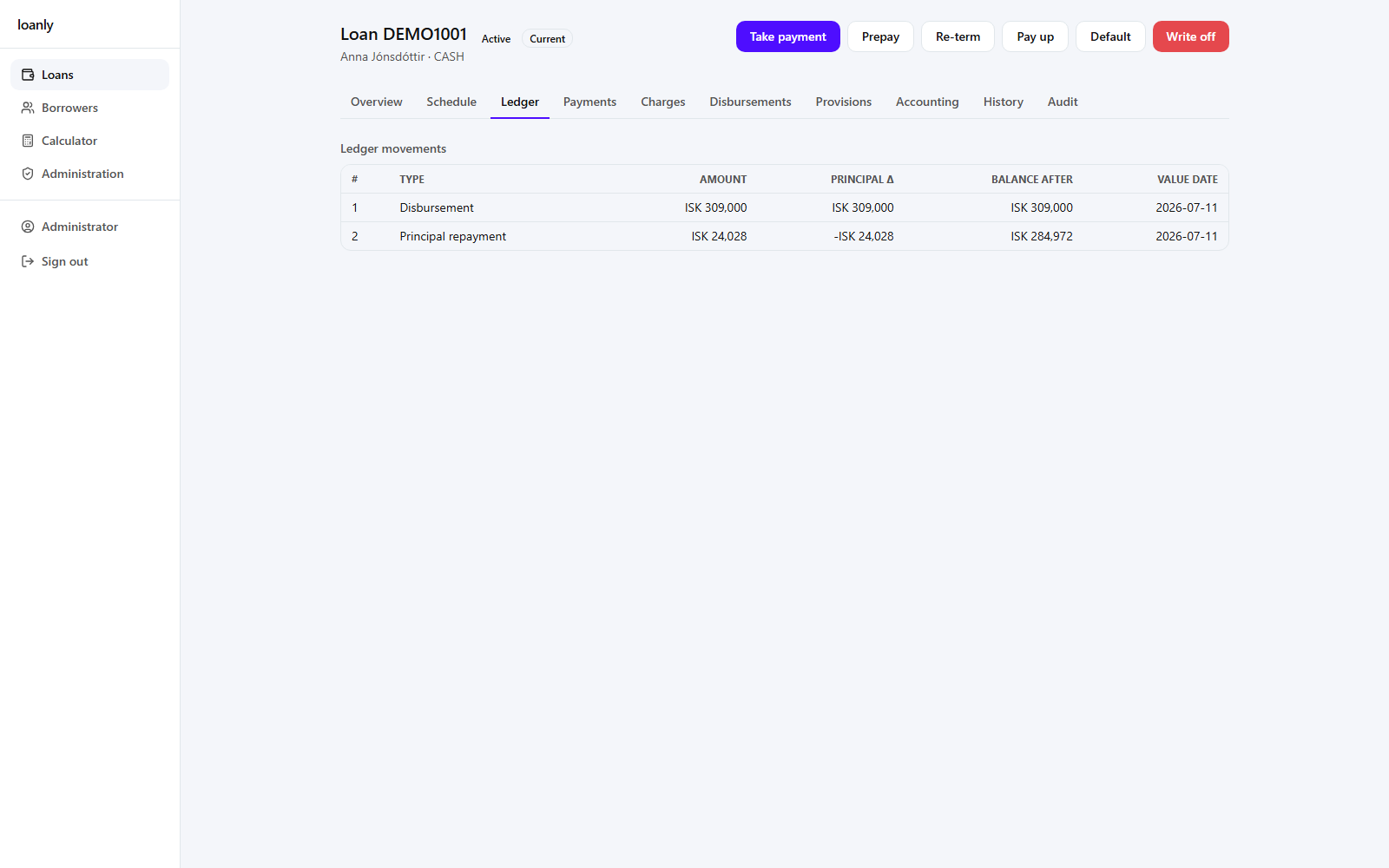
The value-dated sub-ledger: every signed movement (disbursement, repayments) with the running outstanding balance. Append-only — the balance is the sum of the deltas.
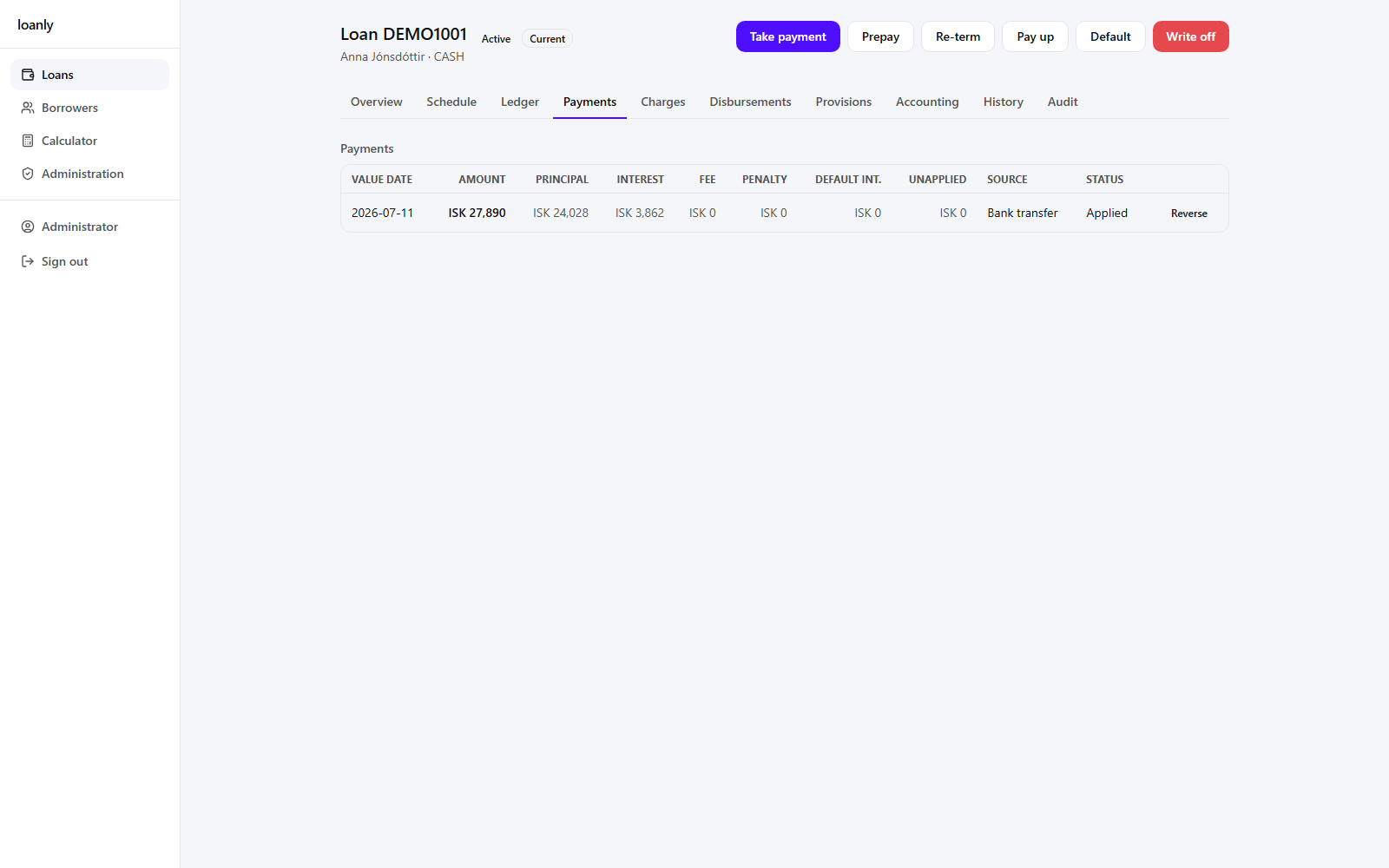
Payments
Recorded payments, each expandable to its allocation breakdown across principal / interest / fees / penalties / default interest, plus anything left unapplied.
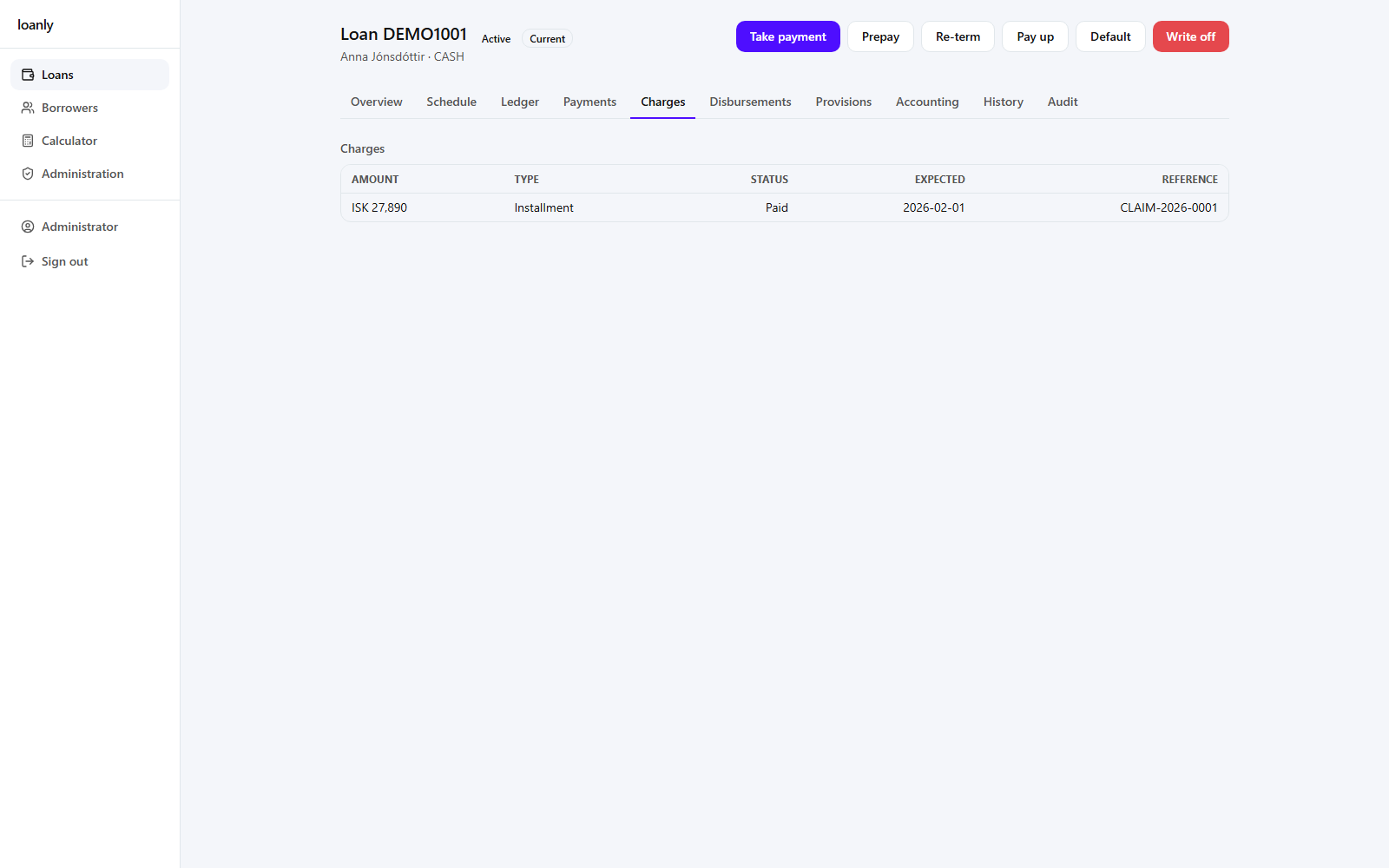
Charges
Collectibles raised against the loan (installment charges, additional-payment and pay-up charges, default costs), their status, expected payment date, and any bank-claim reference.
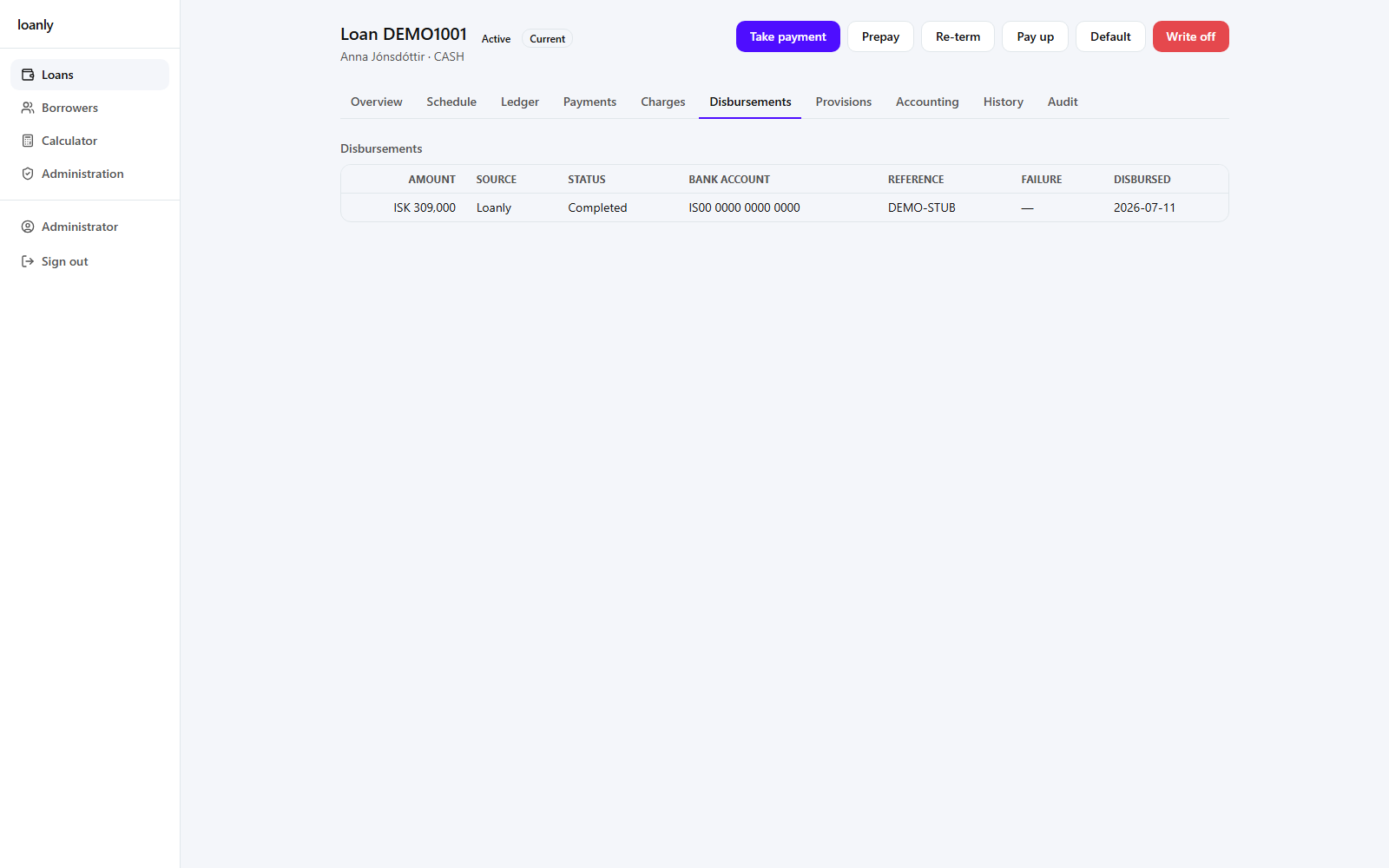
Disbursements
Payout records with their source (Loanly-performed vs partner-funded) and status (Pending → Completed / Failed), the destination account, the rail reference, and any failure reason. See Concepts → Disbursement.
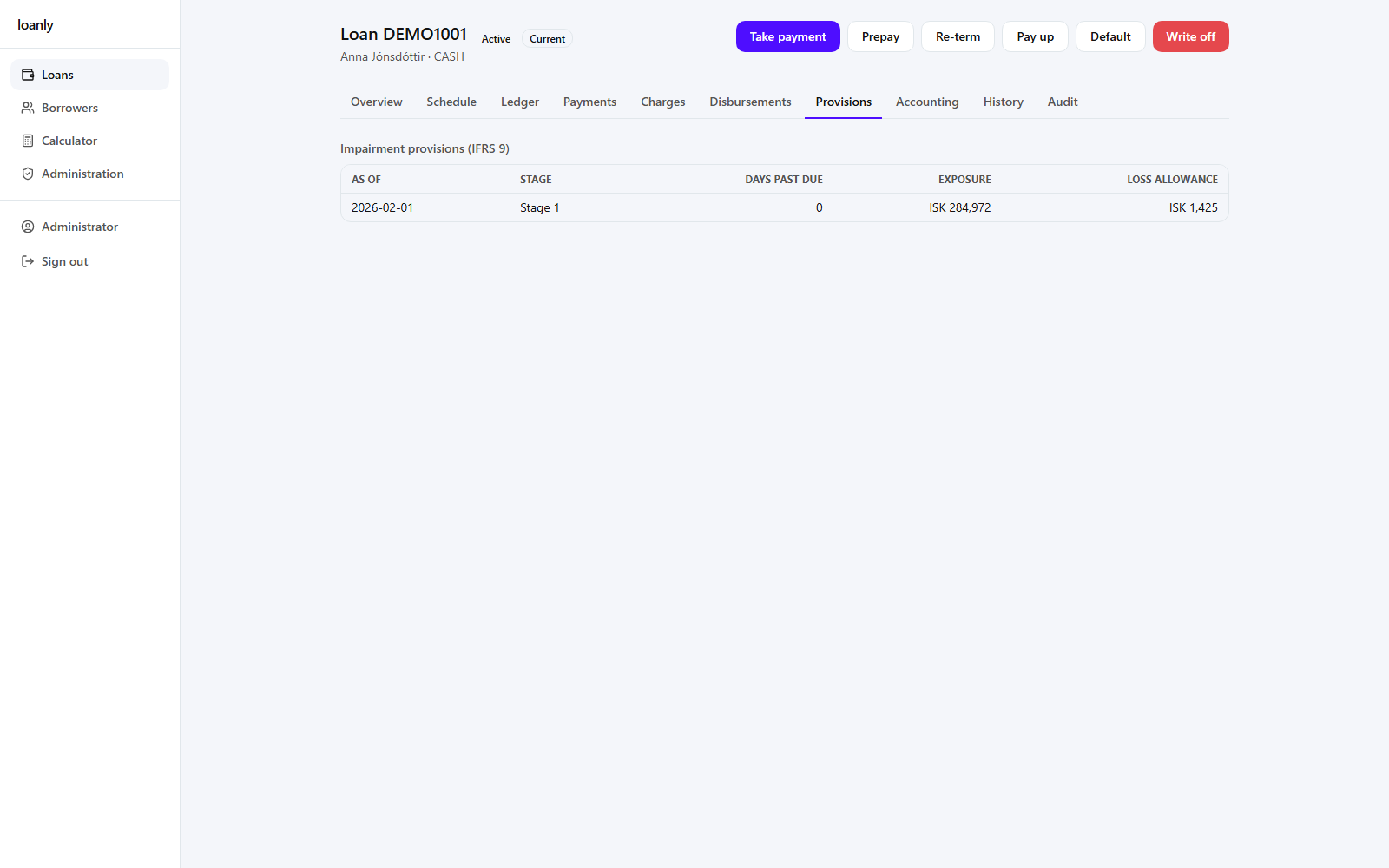
Provisions
IFRS-9 impairment snapshots per run date: stage, days past due, exposure at default, and the loss allowance.
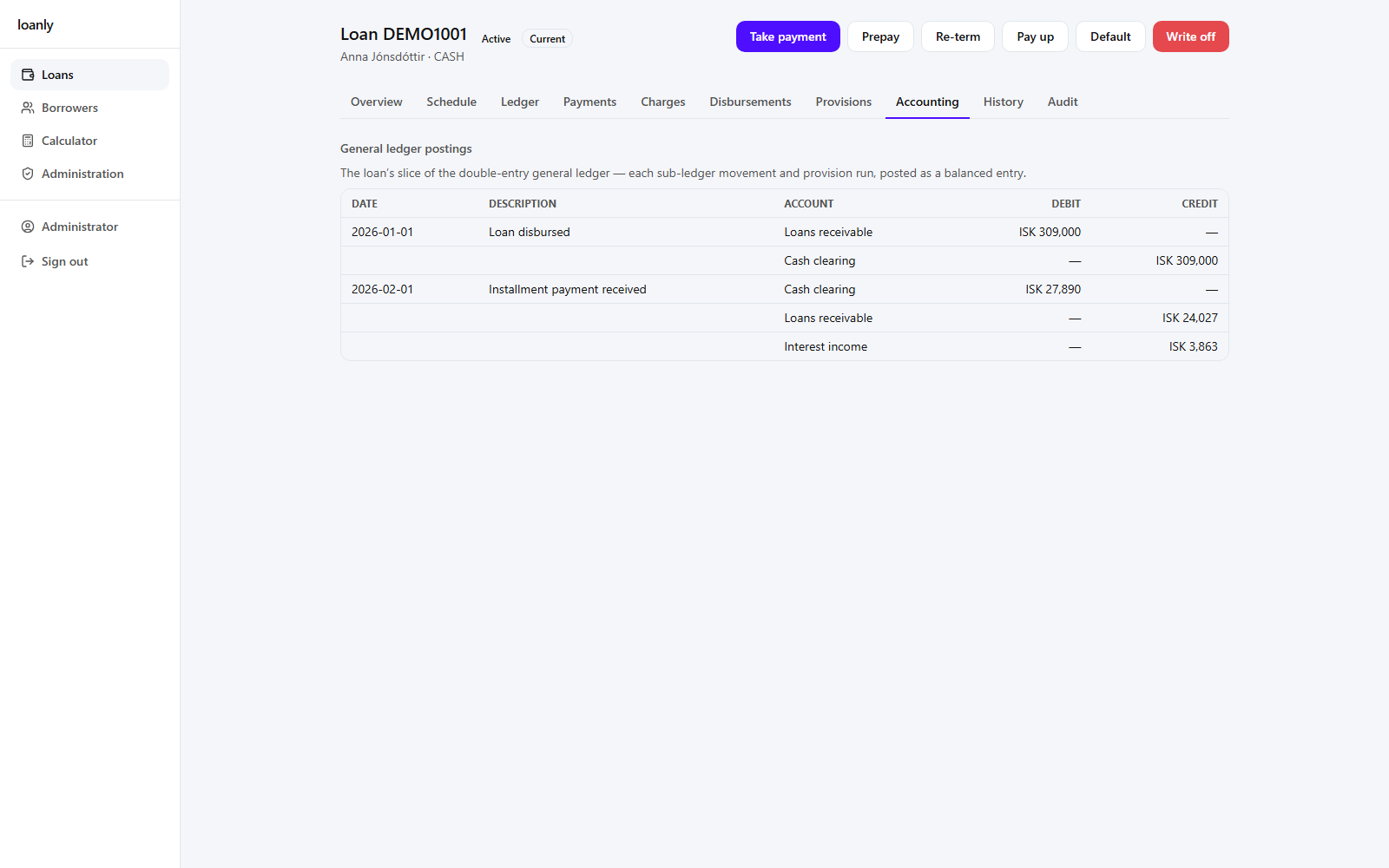
Accounting
The loan's slice of the double-entry general ledger — each sub-ledger movement and provision run, posted as a balanced journal entry.
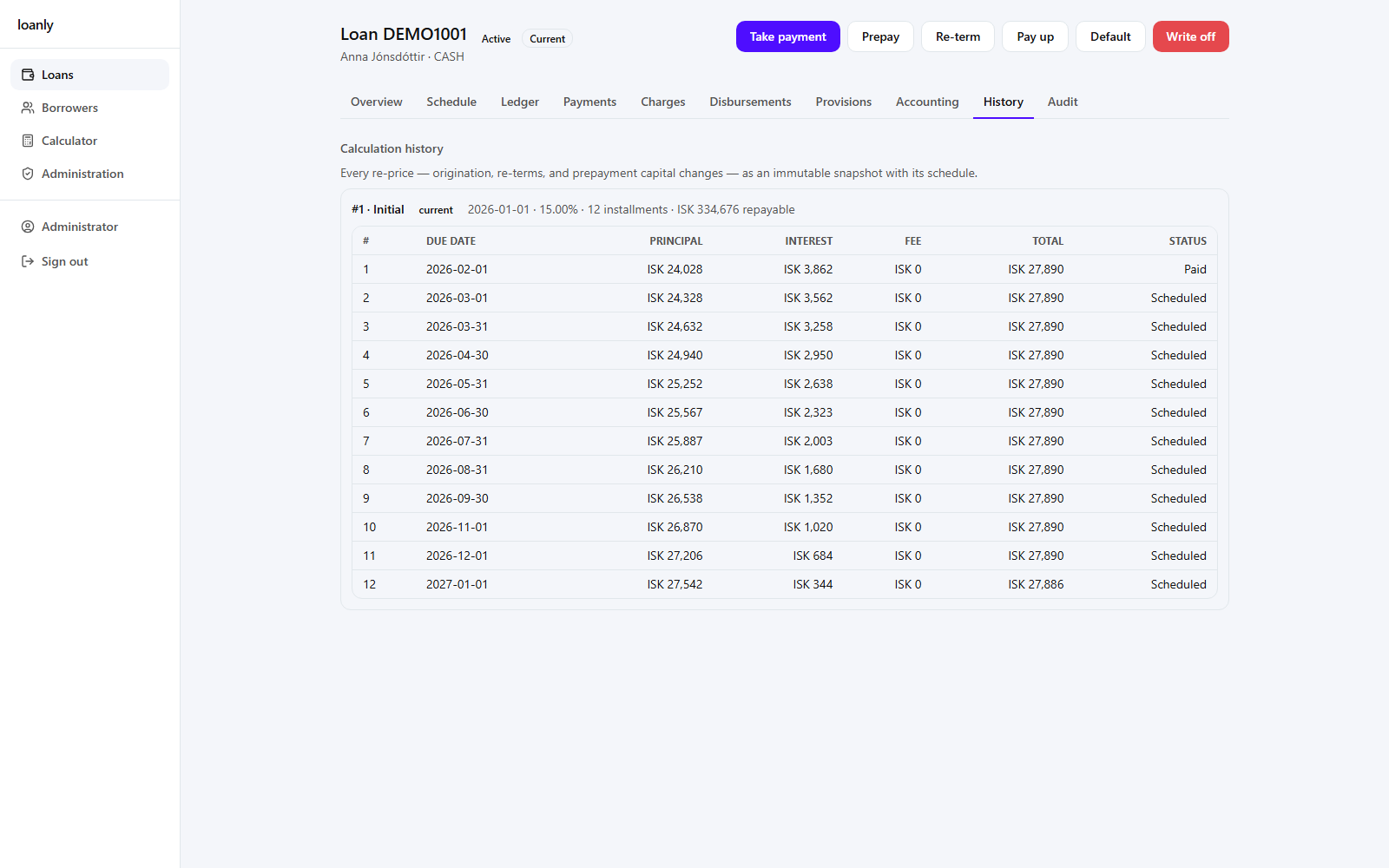
History
Every calculation as an immutable snapshot with its schedule — origination plus each re-term or prepayment capital change — so the current plan and every superseded one are auditable together.
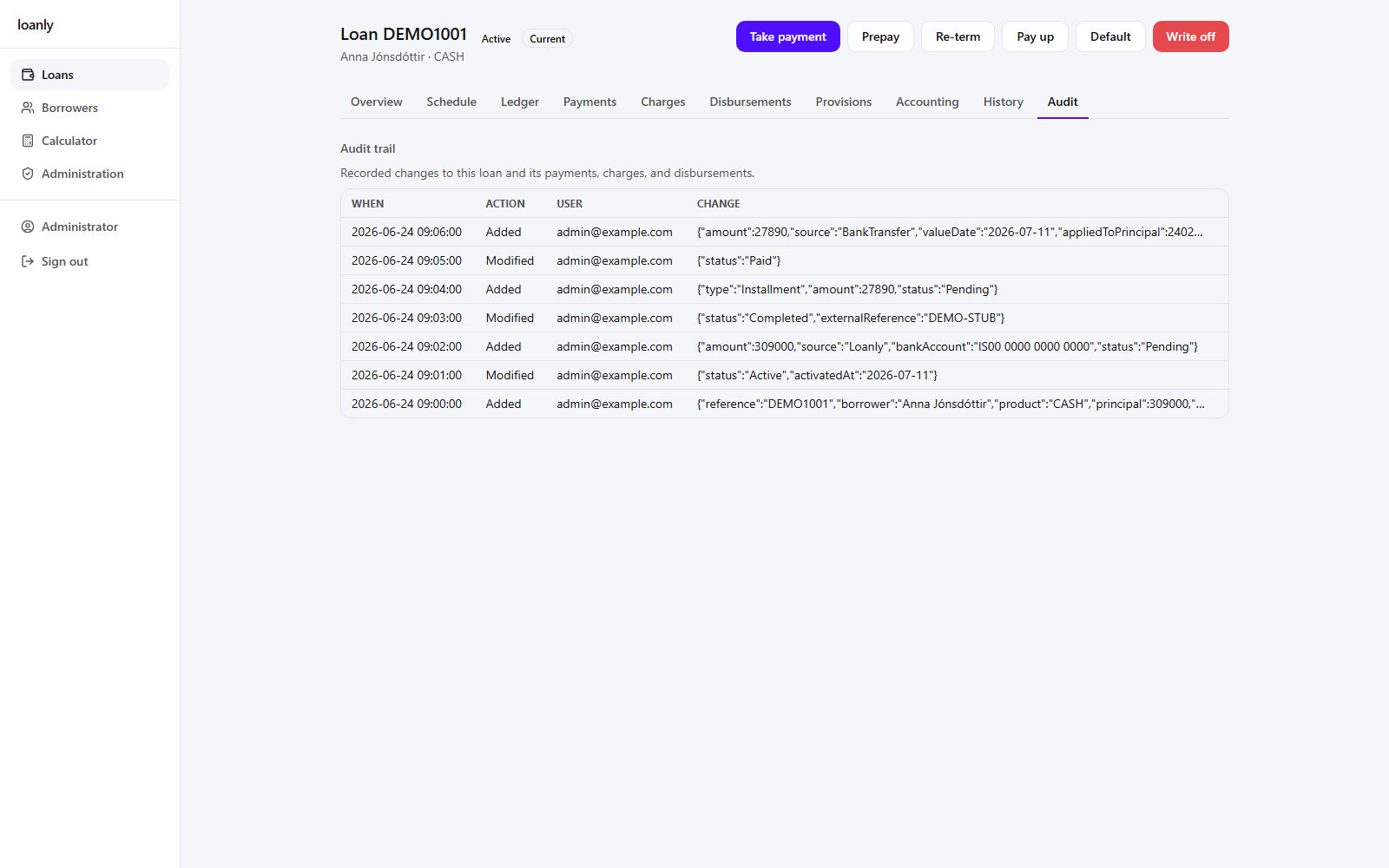
Audit
Every change recorded against the loan and its related records — the action, who did it, and when.
For how the lifecycle fits together, see Concepts → Loan lifecycle.